
English| EUR
Suggested for you
More currencies
Choose a language
The Amalfi Coast stretches 50 kilometers along the Sorrentine Peninsula, connecting 13 clifftop communes through a single winding highway. Planning a coastal trip here means choosing your base town, understanding ferry versus bus logistics, and timing your visit around seasonal crowds. This guide delivers the framework.
Quick answer
Plan your Amalfi Coast trip by selecting a base town (Positano for luxury, Amalfi for central access, or Ravello for hilltop calm), booking accommodation three to six months ahead for summer visits, and arriving between April and June or September and October to avoid peak-season congestion. The coastline itself is free to access year-round, though individual beaches, archaeological sites, and villas charge separate entrance fees. Arrive early—between 07:00 and 10:00—to secure parking and avoid midday ferry queues.
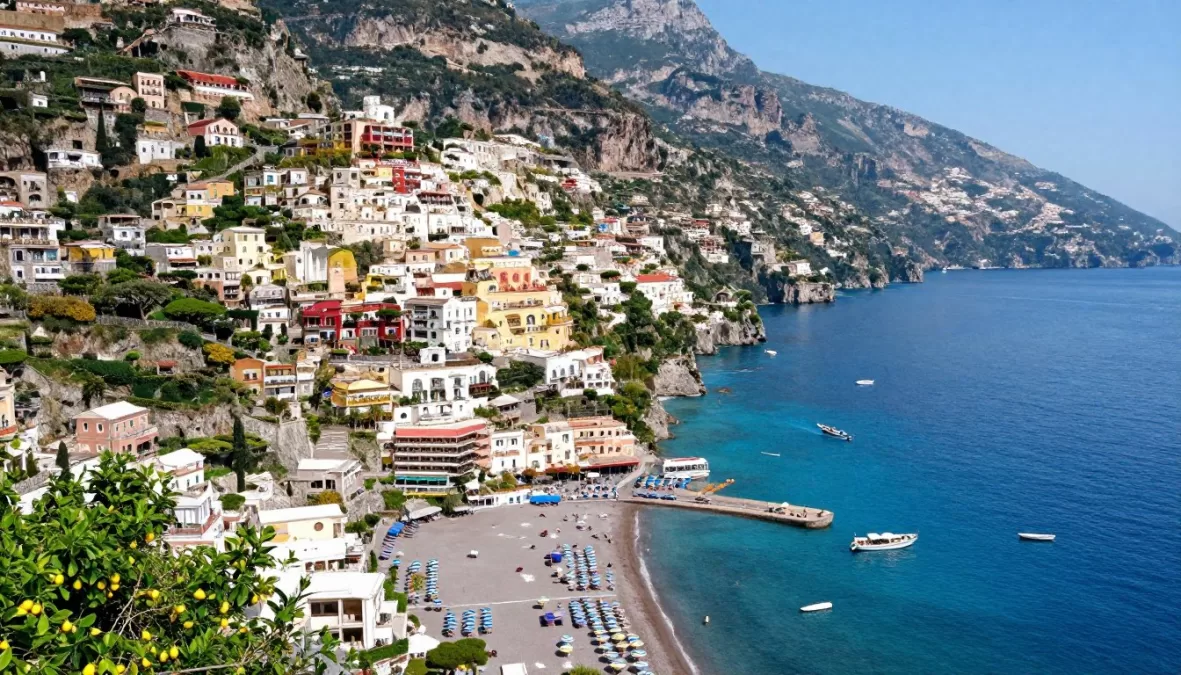
The Amalfi Coast operates on a narrow ribbon of asphalt carved into vertical limestone in the 1850s, a geography that dictates every logistical choice a traveler makes. Thirteen towns cling to this 50-kilometer stretch between Positano and Vietri sul Mare, each connected by the SS163 coastal road and seasonal ferry lines. There is no train. Your planning success hinges on understanding which town serves as your base, how you move between villages, and when you visit. Choosing a base town determines your daily rhythm. Positano offers proximity to western beaches and the Path of the Gods trailhead, but prices reflect its postcard status. Amalfi sits centrally with reliable ferry and bus connections to Ravello, Atrani, and Salerno. Ravello perches 365 meters above sea level, offering cooler evenings and the Villa Cimbrone gardens, but requires a bus transfer from the coast road. Sorrento, technically outside the Costiera, functions as a gateway with direct rail links to Naples and Pompeii. Visitors planning multi-day walking tours often anchor in Praiano or Furore, smaller villages with fewer tourist services but direct trailhead access. Transport shapes every itinerary. SITA Sud buses run the SS163 from Salerno to Sorrento, navigating hairpin turns and tight village centers—purchase tickets at tabacchi shops before boarding. Alicost and Travelmar ferries operate April through October, linking Positano, Amalfi, Salerno, and Capri, with departures concentrated between 09:00 and 18:00. Ferry schedules compress outside summer months. Private drivers charge €100-€180 for point-to-point transfers, worthwhile for luggage-heavy arrivals or evening departures when public transport thins. Renting a car offers flexibility but demands confidence on narrow roads with sparse parking—most towns restrict vehicle access to residents during peak hours. Accommodation booking windows stretch further than most Italian destinations. Reserve three months ahead for April, May, September, and October stays; six months for July and August. Family-run guesthouses in Atrani and Minori cost half the rates of Positano boutique hotels while offering the same coastal access. Verify whether your lodging includes breakfast, as village cafés open later than early ferry departures. Confirm the exact address and whether the property sits on the main road or requires a staircase descent—some Positano hotels involve 200-step approaches with no porter service. How to plan a trip to the Amalfi Coast ultimately means reconciling the fantasy of spontaneous Mediterranean wandering with the reality of limited road capacity and seasonal demand. The coastline rewards early risers, advance bookers, and travelers who build rest days into their itineraries.
“Your planning success hinges on understanding which town serves as your base, how you move between villages, and when you visit.”
The Amalfi Coast is located in the Province of Salerno, Italy, with the most accessible approach being by sea or public transit. Due to narrow, winding roads and limited parking, personal vehicle travel is frequently difficult for visitors.
Circumvesuviana line from Naples to Sorrento then SITA bus
SITA Bus line from Salerno or Sorrento
Ferry from Salerno, Naples, or Sorrento
SS163 Amalfitana road
To avoid congestion and limited parking, utilize ferry services or public buses to reach the destination. Aim for the best arrival window of 07:00–10:00 to minimize exposure to peak crowds and heat.
A five-day itinerary balances the major towns with quieter villages, moving west to east to minimize backtracking. This structure suits first-time visitors who want both cultural landmarks and coastal scenery.
Start in Positano to explore the terraced streets and Spiaggia Grande, then drive or ferry east to Praiano for sunset views from the less-crowded Chiesa di San Gennaro. Allow three hours in Positano for walking and beach time.
Spend the morning in Amalfi visiting the cathedral and its cloister, then walk the fifteen-minute coastal path to Atrani, a compact fishing village with a small piazza. Reserve two hours for the cathedral complex and another hour in Atrani.
Head uphill to Ravello to tour Villa Rufolo and Villa Cimbrone, both known for their garden terraces overlooking the coast. Budget half a day; if time allows, walk part of the Sentiero degli Dei trail from Bomerano.
Stop at the Furore Fjord bridge for photos, then continue to Conca dei Marini to visit the Grotta dello Smeraldo sea cave by boat. These are quick stops—thirty minutes each—ideal for a morning loop.
End in the twin beach towns of Maiori and Minori, less polished but wider and sandier than western beaches. Walk the coastal promenade between them and sample local pastries in Minori; allow three hours total.
Access to the Amalfi Coast region is free for all visitors. Individual costs apply only when entering specific managed sites, museums, or private beach areas.
Verdict: A typical visitor pays 0 EUR for regional access, with total costs depending solely on chosen entrance fees for private attractions or specific heritage sites.
Prepare these essentials before visiting the Amalfi Coast to ensure smooth travel and access to towns, trails, and coastal sites.
The Amalfi Coast presents significant accessibility challenges due to its steep, vertical terrain and historic stone stairways. Most towns feature uneven surfaces and limited infrastructure for visitors with reduced mobility.
Historic town centers and narrow pedestrian paths are largely inaccessible to wheelchairs.
Vertical topography requires navigating frequent stairs to move between streets and levels.
Limited public lifts exist in specific areas like Sorrento, though availability is inconsistent.
Facilities are primarily found in modern hotels or some larger municipal buildings.
Visit during the 07:00–10:00 window to avoid heavy pedestrian traffic on narrow walkways.
Everything you need to know about how to plan a trip to the amalfi coast
To organize your journey, focus on regional logistics by scheduling walking tours in advance to secure your spot. Mapping out transit routes between villages is a key step for anyone learning how to plan a trip to the amalfi coast.
The recommended arrival window is 07:00–10:00. Arriving early helps you avoid peak midday heat, ferry congestion, and the largest tourist crowds in the main towns.
There is an entrance fee of 0 EUR for the general region. While the area itself is free to access, individual historical sites, private gardens, and some beaches may charge their own fees.
When you decide how to plan a trip to the amalfi coast with family, prioritize choosing pedestrian-friendly paths and shorter routes. Bringing comfortable footwear is essential, as the terrain often involves many stairs and uneven coastal trails.
A common mistake is underestimating the travel time between towns due to traffic on the winding coastal roads. It is better to base your itinerary on ferry schedules or local guided walks to keep your plans realistic.
The Amalfi Coast is open daily from Monday through Sunday, 00:00–23:59. This constant accessibility ensures you can explore the cliffs, Mediterranean landscapes, and historic villages at your preferred pace.